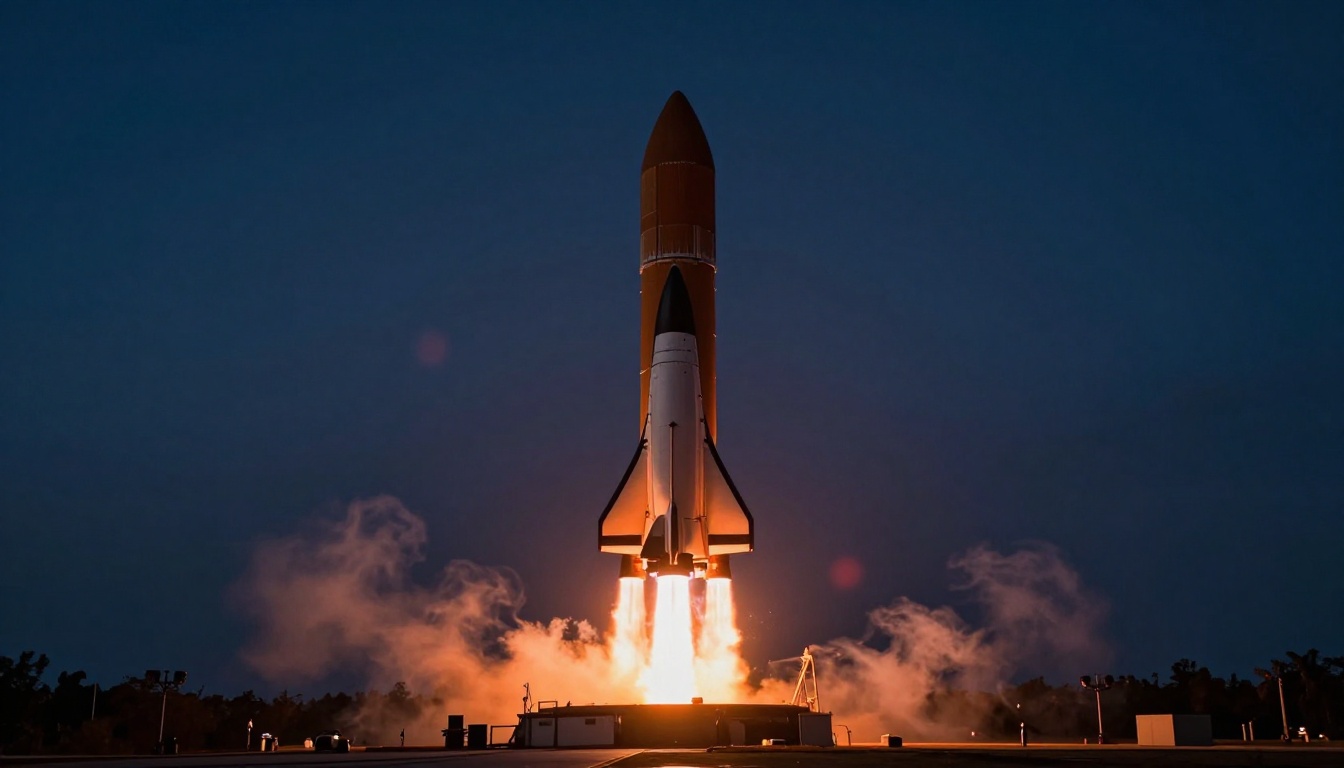
Ever watched a rocket roar into the sky and wondered how it beats Earth’s grip? These massive machines hurl satellites, astronauts, and probes beyond our atmosphere using raw power and clever physics. They fight gravity, punch through thick air, and hit speeds over 17,000 miles per hour.
Rockets work because they push hot gas out the back at insane speeds. That reaction shoots them forward, even in space’s empty vacuum. We’ll break it down step by step: from Newton’s laws that make it possible, to engines that create the thrust, stages that shed weight, the path through the sky, and today’s real-world stars like SpaceX Starship. By the end, you’ll see exactly how these beasts escape our planet.
What Makes Rockets Blast Off? Newton’s Laws Explained
Rockets follow basic physics rules set by Isaac Newton centuries ago. These laws explain every twist and turn of a launch. First, objects stay at rest or keep moving straight unless a force acts on them. That’s inertia in action.
Think of a rocket sitting on the pad. It wants to stay put. Engines fire, and thrust overcomes that. Once moving, only drag, gravity, or engine cutoff can stop it. In space, with no air resistance, it coasts forever if pointed right.
Newton’s second law ties force to acceleration. Force equals mass times acceleration. So, more thrust means quicker speedup. But rockets start heavy with fuel. As they burn it, mass drops, so acceleration climbs fast.
The star is Newton’s third law: every action has an equal opposite reaction. Gas blasts down from the nozzle. The rocket surges up. No air needed; it works in vacuum because momentum swaps between exhaust and rocket.
For a clear breakdown, check this explanation of rocket propulsion and Newton’s third law. Simple demos show how expelling mass propels anything, from fireworks to spacecraft.
Action and Reaction: The Key to Rocket Thrust
Exhaust shoots out faster than sound, often five times quicker. Engines mix fuel and oxidizer into hot gas over 5,000 degrees Fahrenheit. It expands through the nozzle, hits supersonic speed, and flies backward.
Conservation of momentum keeps the math straight. Rocket mass times velocity equals exhaust mass times its velocity, but opposite. Heavy rocket with slow speed balances light exhaust screaming away.
Picture a garden hose. Water sprays back hard when you fight the kick. Rockets do that with millions of pounds of force. One Falcon 9 engine alone pushes over 500,000 pounds at liftoff.
This push never stops during burn. It stacks up, building speed. Without it, no launch happens.
Staying in Motion and Speeding Up
Inertia means once thrusting, the rocket resists slowdowns. Gravity pulls back, but engines overpower it early on.
Second law shines as fuel burns. Mass shrinks, so same thrust accelerates more. A rocket might double speed after half its fuel goes.
Guns offer a quick analogy. Bullet flies forward; gun recoils back. Scale that to tons of propellant, and you get liftoff.
These laws team up perfectly. Thrust reacts, inertia holds course, and dropping mass boosts pace.
Rocket Engines: Mixing Fuel for Massive Power
Engines gulp fuel and oxidizer, ignite them, and spit fire. Liquid oxygen pairs with kerosene or hydrogen for clean burn. Inside a chamber, pressure builds to thousands of pounds per square inch.
Hot gas rushes to the nozzle. It bell shape speeds it up, dropping pressure while raising velocity. Exit speed tops 10,000 feet per second for max thrust.
SpaceX Raptor engines use methane and oxygen. They hit higher pressure than most, for more punch. One cluster of 33 on Starship’s booster rivals 17 million pounds of thrust.
Solid rockets pack fuel and oxidizer as one grain. Light a fuse, it burns till done. No pumps needed; simpler but less control.
Liquids pump fuel in, throttle on demand, and shut off clean. Reusability loves them. Solids give huge kick at start, like shuttle boosters.
For solid versus liquid details, this comparison of rocket fuels covers storage, burn rates, and mission fits.
Both thrive in vacuum. No air for combustion; oxidizer brings oxygen.
Solid Fuel Boosters vs Liquid Engines
Solids shine for instant power. NASA’s SLS uses two giants, each as tall as a 25-story building. They roar for two minutes, then drop.
Pros include reliability; once lit, they go. Cons? Can’t stop or tweak throttle. Best for boosters.
Liquids rule main stages. Falcon 9’s Merlin engines restart, land boosters. Starship’s Raptors aim for hundreds of uses.
Liquids handle complex paths. Solids suit quick boosts. Many rockets mix both for balance.
Why Rockets Shed Stages Like Snake Skin
Single rockets can’t carry enough fuel for orbit. Physics demands too much mass. Solution? Multiple stages.
Lower stage burns first, hauls everything up. Fuel gone, it falls away. Upper stage, now lighter, ignites for more speed.
Most orbit rockets have two or three stages. Saturn V had three; Falcon 9, two plus payload.
Dropping dead weight obeys second law. Less mass means wild acceleration. Upper stages reach 25,000 mph.
Starship splits into Super Heavy booster and upper ship. Booster returns; ship goes orbital.
NASA’s balloon demo shows it simply: two-stage balloon rocket activity. First balloon empties, second takes over.
One big stage? Fuel tanks would weigh more than payload. Staging wins every time.
Climbing Through Gravity and Air to Reach Space
Launch starts vertical to clear thick air. Thrust crushes gravity at 1.3 to 2 g’s early.
Air drags hard below 50 miles. Friction heats nose to 2,000 degrees Fahrenheit. Streamlined shape and fins fight it.
Speed builds to 17,500 mph for low orbit. Space begins around 62 miles, where air fades.
Path curves smartly. Straight up wastes fuel; pure horizontal stalls in drag.
Beating Earth’s Pull and Drag
Gravity pulls 9.8 m/s squared constantly. Engines thrust three times harder at liftoff.
Drag peaks at Mach 1, then drops as air thins. Heat shields or ablative coatings protect.
Thrust tails off as fuel burns, but speed carries it.
The Smart Path: Gravity Turn to Orbit
Rockets pitch over gradually, 30-45 degrees. Gravity pulls nose down naturally, saving fuel.
This builds horizontal speed. At apogee, circularize with final burn.
Orbit means constant freefall around Earth. You fall, but curve matches surface drop.
See this gravity turn definition for the fuel-saving tilt.
Real Rockets Today: Starship and Cutting-Edge Tech
SpaceX Starship leads with 11 test flights by March 2026. Flight 12 looms in April, using Version 3 with Raptor 3 engines. All 33 on the Super Heavy booster fired reliably in recent tests.
Full reuse stays the goal. Tower catches and landings test soon for NASA’s Artemis 3 in 2027. No catches yet, but rapid iterations push ahead.
Compare to SLS: Artemis 2 crews up end of March 2026. It’s expendable, costly, with few launches. Starship eyes dozens yearly.
Blue Origin’s New Glenn delays first flight. Partial reuse, but trails in tests.
Methalox fuel cuts costs, makes Mars viable. Quick pads in Texas and Florida speed turns.
These rockets prove principles: third law thrust, staging smarts, efficient paths.
Rockets turn physics into reality
Newton’s laws drive thrust and motion. Engines mix fire for power. Stages lighten the load. Smart turns beat gravity and air.
Modern wins like Starship slash costs, open space wide. From ISS runs to Mars dreams, they deliver.
Watch a launch live this month. What blows your mind most about rockets? Share below.
(Word count: 1492)