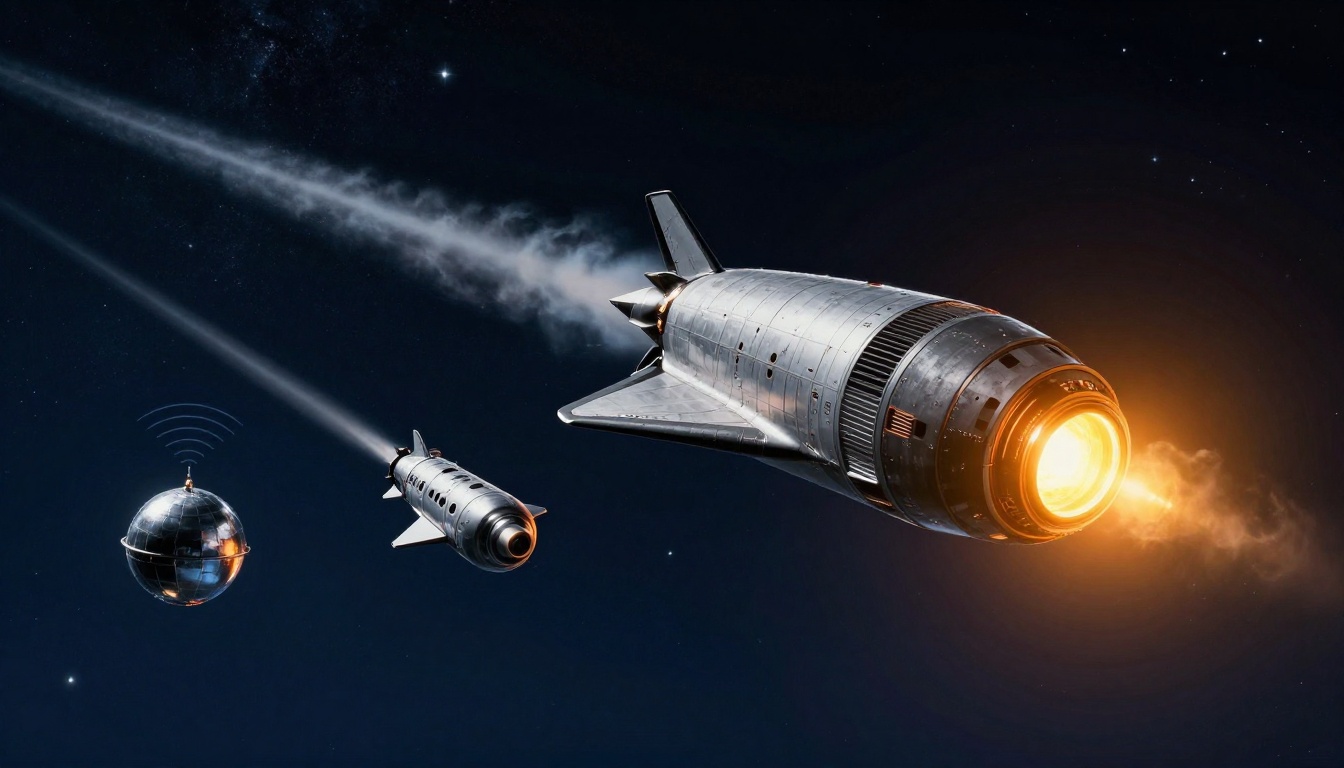
Imagine a simple beep echoing across radios worldwide in 1957. That sound from Sputnik 1 shocked everyone and kicked off the space age. Fast forward to today, and massive Starship rockets blast off, land upright, and gear up for reuse, all while private companies lead the charge.
Space exploration started as a tense Cold War contest between superpowers. Governments poured billions into beating rivals to orbit and the Moon. Now, it mixes international teams, reusable tech, and bold private ventures. Costs drop fast, so trips to space feel less like one-off stunts and more like routine business.
These shifts touch your daily life too. GPS in your phone came from satellite tech. Future bases on the Moon or Mars could spark new materials and energy sources. Let’s trace this path from those early beeps through rivalries, stations, private rockets, and plans for 2026 and beyond.
Sparks Fly in the Space Race: First Satellites and Moon Landings (1950s-1960s)
The Cold War lit the fuse for space efforts. Nations raced to prove superiority. The Soviet Union struck first with Sputnik. That tiny satellite beeped for 21 days and changed everything. The U.S. scrambled to catch up. This era saw satellites, probes, and humans reach the Moon.
Competition drove quick wins. Rockets grew stronger. Computers shrank in size but packed more punch. Goals expanded from basic orbits to lunar steps.
Sputnik’s Wake-Up Call and Early Probes
On October 4, 1957, Sputnik 1 launched. It weighed just 184 pounds. Yet its radio signal panicked the West. People feared Soviet missiles next. For details on this pivotal launch, check NASA’s account of Sputnik and the space age dawn.
The Soviets followed with Sputnik 2. It carried Laika, the first dog in space. She didn’t survive, but the feat showed life could endure orbit. Luna 2 hit the Moon in 1959. Luna 3 snapped its far side photos.
America responded. Explorer 1 launched in 1958. It found Earth’s radiation belts. NASA formed that year too. These probes mapped unknowns. They proved space travel worked. In short, simple beeps turned into world-shaking discoveries.
Humans Break Free: From Orbit to the Lunar Surface
Yuri Gagarin orbited Earth in 1961. He became the first human in space. “Poyekhali,” he said, meaning “Let’s go.” The U.S. sent Alan Shepard soon after. Then John Glenn circled the globe.
Valentina Tereshkova flew solo in 1963. She proved women belonged up there. Gemini missions practiced docking and spacewalks. Ed White floated free in 1965.
Apollo ramped up. After tragedies like Apollo 1, success came. Apollo 11 landed in 1969. Neil Armstrong stepped out. “That’s one small step for man, one giant leap for mankind,” he declared. Buzz Aldrin joined him. Michael Collins orbited above. For mission facts, see Britannica’s Apollo 11 overview.
Multi-stage rockets made it possible. Onboard computers guided them. This phase shifted focus from probes to people on other worlds.
Orbiting Homes and Reusable Wings: Stations and Shuttles Era (1970s-1990s)
Rivalry cooled a bit. Focus turned to staying longer in space. Stations let crews live up there for months. Shuttles flew like trucks to orbit. Probes pushed deeper into the solar system.
Cooperation grew. Nations shared tech and risks. Reusability hinted at lower costs. Experiments tested human limits.
Pioneering Space Stations for Long Hauls
Salyut 1 launched in 1971. It hosted the first crew for 23 days. Tragedies hit too. Soyuz 11 crew died returning. Lessons improved life support.
Skylab followed in 1973. Americans lived there 84 days straight. They studied the Sun during a solar max. Repairs happened mid-mission.
Mir opened in 1986. It lasted 15 years. Records fell for longest stays. Crews recycled air and water. Tech like closed-loop systems kept them alive. These homes proved humans could settle in orbit.
Shuttle Adventures and Deep Space Probes
The Space Shuttle debuted in 1981. Columbia flew 135 missions total. It carried satellites and labs. For a timeline, view ESA’s Space Shuttle history.
Hubble launched in 1990. Early blur led to fixes. It revealed galaxies and black holes. Shuttles deployed it and more.
Voyager 1 and 2 zipped past Jupiter and Saturn. They carry Golden Records for aliens. By 1990s, ISS planning united Russia and the West. Assembly started in 1998. Private satellites boomed too. This era built foundations for teamwork.
Private Space Takes the Wheel: Cost Cuts and New Players (2000s-2010s)
Private firms entered big. SpaceX started in 2002. They nailed reusability. Rovers dug into Mars secrets. Tourism teased the public.
NASA bought rides instead of building all. Costs plunged. Focus hit Mars and beyond.
Rovers Roaming Red Planet and Pluto Visits
Spirit and Opportunity landed in 2004. They lasted years past plans. Water clues hinted at past habitability.
Curiosity arrived in 2012. It drills rocks and sniffs methane. Perseverance follows since 2021. It grabs samples for return.
New Horizons flew by Pluto in 2015. It showed icy mountains. Nuclear power and tough wheels made these roamers tough. Private cash sped progress.
Rocket Landings That Changed Everything
SpaceX tested Falcon 9 landings from 2013. Early fails taught lessons. Success came in 2015. Boosters stuck ocean platforms. Later, land pads.
By 2017, reuse flew multiple times. Costs fell from $10,000 per pound to under $3,000. See Quartz’s visual history of SpaceX landings.
Blue Origin and Virgin tested suborbital hops. Private cargo reached ISS in 2012. Inspiration4 orbited civilians in 2021. Commercial era arrived.
Moon Comeback and Mars Dreams: Artemis and Starship Surge (2020s to 2026)
Artemis tests uncrewed flights. Starship iterates fast. China joins Mars efforts. Reusability scales up. By March 2026, orbital catches happen routinely.
Private leads mean more launches. NASA contracts services. Colonization talks heat up.
Artemis Program’s Lunar Revival
Artemis 1 splashed down in 2022. It tested Orion around the Moon. Artemis 2 plans crew flyby in 2026. Artemis 3 aims for landing, but delays push it to 2027 or later due to Starship and suit issues.
Diverse astronauts train. South pole targets water ice. Base Camp visions include habitats by 2030s. International partners help.
Starship’s Giant Leaps Toward Mars
SpaceX flew five Block 2 Starships by 2026. They caught two Super Heavy boosters with tower arms. One reused in May 2025. Block 3 upgrades Raptor 3 engines. Flight 12 tests in February or March 2026 include payload deploys.
Refueling demos prep Mars hops. Methalox fuel makes on-site production possible. Elon Musk eyes crewed Mars late 2020s. Over 300 launches show pace.
China’s Tianwen-1 roams Mars. Perseverance keeps sampling. Private dominance shifts space to business.
Space exploration transformed from beeps to booster catches. Governments once ruled alone. Now teams and companies share the load. Single-use rockets gave way to reusables that slash costs.
Robots paved paths, but humans expand next. Everyday perks like better batteries and imaging stem from this. Moon bases and Mars cities loom soon.
Watch Starship’s next test. It could refuel in orbit. Support these efforts. Your future rides on that next giant leap. What’s your take on Mars trips? Share below.