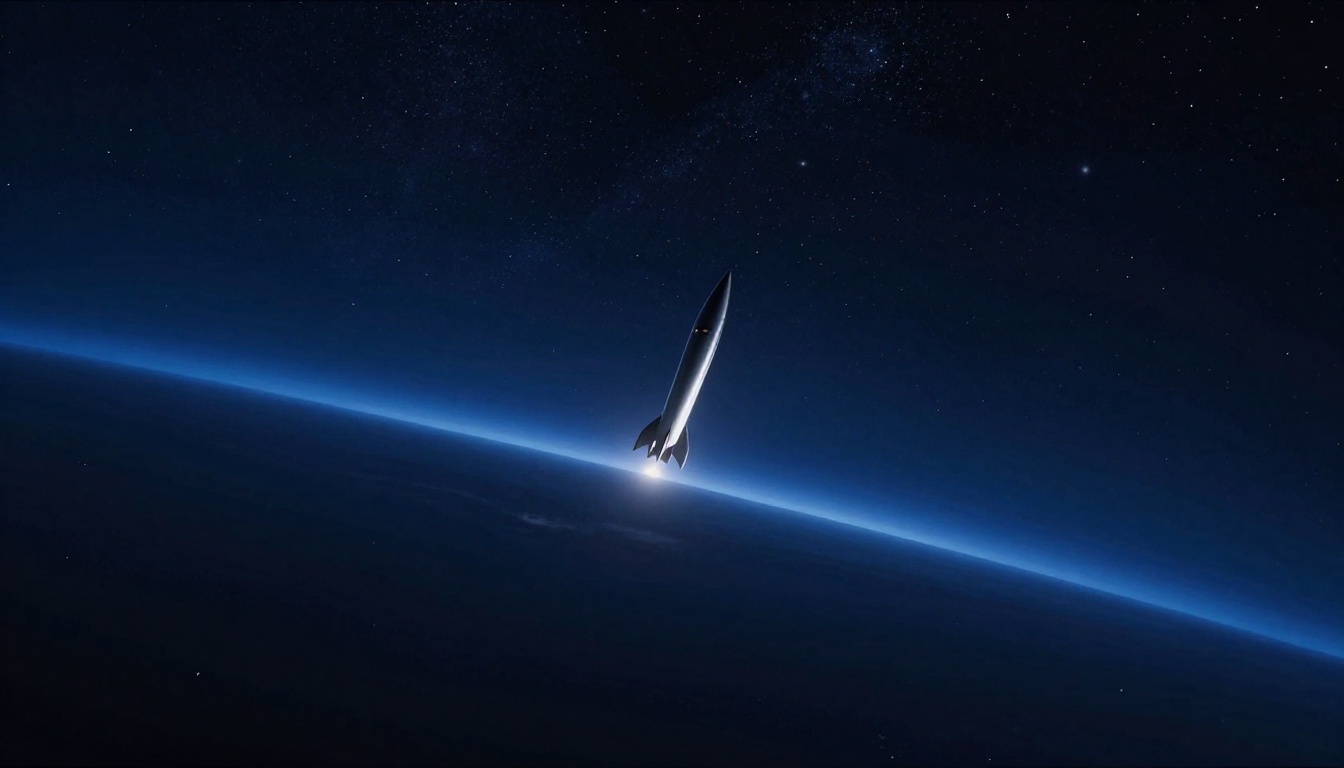
Look up at the night sky on a clear evening. Stars sparkle against the black void. You might wonder: where does Earth end and space start?
Space marks the vast region beyond our planet’s atmosphere. It holds almost no air, just scattered particles. Planes fly in the air below. Rockets push through to reach it. But the shift isn’t sudden. Our atmosphere thins out bit by bit. Scientists use lines like the Karman line at 100 kilometers up or NASA’s mark at 80 kilometers to pin it down.
As of March 2026, no big shifts have changed these views. The debate adds spice because real data from satellites backs both sides. This post breaks it down. You’ll see why space differs from air, how boundaries form, key definitions, real flights that hit them, and why it all counts. Let’s climb higher.
What Makes Space Different from Earth’s Air?
Space sets itself apart as a near-vacuum. Air pressure drops to nothing. No weather brews there. Objects float free without support. Earth’s atmosphere, in contrast, hugs the planet in layers. It shields us from sun rays and holds oxygen we breathe.
Planes rely on thick air for lift. They top out around 12 kilometers high. Satellites circle much higher. They need no wings because drag vanishes. For example, the International Space Station orbits at 400 kilometers. It stays put thanks to speed, not air.
Near-Earth space looks empty. Stars and planets wait farther out. But right above us, it’s just thin gas. Fun fact: space holds plasma and cosmic dust too. Still, it feels barren compared to blue skies below.
The full atmosphere reaches about 10,000 kilometers. Most folks think space starts sooner. Why? Aerodynamic flight fails where air thins too much. Rockets take over then.
The Role of Gravity and Orbits
Gravity pulls air close to Earth. It weakens with height, so molecules spread thin. At orbit heights, spacecraft zip around at high speeds. They balance fall with forward motion.
Think of it like swinging a ball on string. Cut the string, and it flies off tangent. Orbits work that way. The boundary matters because below it, drag slows satellites. Above, they coast stable. Spacecraft cross into this zone for missions.
Why There’s No Sharp Line Where Space Begins
Earth’s air fades gradually, not with a cliff edge. Molecules linger high up. Density drops slow over kilometers. No wall divides air from void.
The exosphere tops the layers. Atoms there bounce off each other rarely. Solar wind strips some away. Sun activity swells or shrinks it. During solar storms, it puffs out farther.
Physics shows no clean cut. Laws need one for records and rules. It’s like fog thinning to clear sky. You sense the change, but pick no exact spot. Studies in 2026 confirm this fade. Satellite data tracks drag effects up to 100 kilometers or so.
For context on layers, check NASA’s overview of Earth’s atmosphere.
Layers of the Atmosphere Explained
Troposphere hugs ground to 12 kilometers. Weather happens here. Planes cruise its top.
Stratosphere rises to 50 kilometers. Ozone blocks UV rays. Balloons float in it.
Mesosphere spans 50 to 85 kilometers. Meteors burn up. Coldest spot around.
Thermosphere heats to 600 kilometers. Auroras glow. Space shuttles skimmed it.
Exosphere blends to space beyond 500 kilometers. Atoms escape to infinity.
Each layer thins. Space emerges where utility ends.
Key Boundaries: Karman Line vs. NASA Line
Two main lines define the edge. The Karman line sits at 100 kilometers, or 62 miles. The international group FAI set it. They track aviation and space records. Above it counts as spaceflight.
Theodore von Karman calculated it. He found wings lose lift around 84 kilometers. Planes need orbital speeds there. FAI rounded up to 100 for simplicity. It’s physics-based: where aero gives way to astro.
NASA, FAA, and US Air Force use 80 kilometers, or 50 miles. They award astronaut wings there. Why lower? Data shows drag minimal above it. Satellites hold orbits stable.
Here’s a quick comparison:
| Definition | Height | Used By | Basis |
|---|---|---|---|
| Karman Line | 100 km | FAI (international) | Wing lift fails; orbital speed needed |
| NASA Line | 80 km | NASA, FAA, USAF | Astronaut wings; satellite stability |
This split affects who claims space trips. FAI holds firm at 100 kilometers in 2026. US views work practical for flights. For more on the Karman line, see the Astronomy Magazine article.
FAI’s Official 100 km Standard
FAI rules astronaut badges and records. Cross 100 kilometers, earn the title. Suborbital hops like early tests qualify if they top it. Alan Shepard’s 1961 flight hit 187 kilometers. It set the bar.
International unity matters. Most nations follow for treaties.
US Agencies’ 50-Mile Mark
NASA pins wings at 50 miles. FAA licenses commercial rides over it. Virgin Galactic passengers get them. It’s pragmatic. Suborbital peaks often hit 85-90 kilometers.
USAF matches for pilots.
Ongoing Debates in 2026
Jonathan McDowell crunched 43,000 satellite paths. He pushes 80 kilometers. Drag decays orbits below; above, they persist. His 2018 paper sways some. Solar cycles tweak density too.
FAI reviewed but sticks to 100 kilometers. No consensus shift by March 2026. Debates fuel talks on tourism rules. Check McDowell’s analysis on the edge of space.
Real Flights That Test These Boundaries
Commercial rides push these lines. Virgin Galactic’s Unity reaches 86-90 kilometers. It earns US wings, not always FAI ones. Blue Origin’s New Shepard tops 100 kilometers. Jeff Bezos flew to 106 in 2021.
In 2026, Virgin rolls out Delta ships for steady trips. Tickets sell dynamic. Blue pauses now but plans returns. Both give minutes of zero-g and Earth curve views.
These hops test boundaries. Passengers feel space pull. They spark tourism boom.
Suborbital Joyrides to the Edge
Rockets blast up fast. Crest the peak. Fall back gentle under parachutes. Virgin bases in New Mexico. Blue in Texas. Training covers suits and sims.
Buyers pay millions first. Prices drop as flights ramp. 2026 sees more access. For Karman details, visit the Wilson Center FAQ.
Why Knowing Where Space Starts Matters
Boundaries shape laws. Nations claim air up to set heights. Above, space treaties rule. No one owns it.
Records hinge on lines. Astronaut status boosts resumes. Tourism needs clear regs for safety and claims.
Satellites orbit above drag zones. Rules prevent junk buildup.
It fuels wonder too. That invisible line invites us outward. Space beckons with promise.
Space begins beyond the thin atmosphere fringe, around 80 to 100 kilometers up. The Karman line holds as the global standard at 100 kilometers. NASA opts for 80 based on data. No single truth fits all because air fades slow.
Next launch video? Picture that edge. Crew crosses into void. Share your take in comments. What height feels like true space to you? Subscribe for more on cosmic frontiers. The stars await our next step.
(Word count: 1492)